

 Adult house dust mites are so tiny they can sit on the tip of a pin. They have 8 legs and look a bit like a bag of clear jelly. An adult has a short life span of about 10 to 12 weeks. A healthy female can lay up to 3 eggs a day. After 6 to 12 days the egg will hatch producing a six-legged larva which will feed and then pass through 2 nymph stages before emerging as an adult.
 House dust mites are scavengers that have lived on earth for 23 million years. They live in colonies in nest sites of warm blooded animals such as rats, birds, and humans. To help the colony survive the mite has evolved a clever way to recycle hard-to-digest food. Powerful enzymes, placed in mite droppings, act to break down leftover scraps turning them into nourishment. The mite considers its dropping as food.
 Many people think the dust mite bites, but it does not. instead an active digestive enzyme found it its droppings can kill delicate defence cells, enter the body, and continue its journey using the blood stream. One mite enzyme has been found in the fluid surrounding unborn children.
There are six different ways to kill house dust mites. You can freeze, boil, poison, or microwave them, dry them up like a raisin, or put them in a hot tumble dryer for 10 minutes. The best way is to prevent them from finding a hiding place. Uncluttered rooms and micro-porous covers help. For details look further into our site.
 No, they are so small (0.3mm) that you need a magnifying glass to see them. If you do see mites without any magnification, they could be a different kind of mite!

House dust mites eat moulds, fungi, dead mites, bacteria, pollen, or almost anything organic, but their favourite food is mouldy old discarded skin scales.
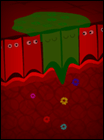 In order to turn hard-to-digest food into an easy meal the mite places active digestive enzymes into its dry droppings. These enzymes stay in the droppings until they meet a moist surface. If the moist surface happens to be delicate human tissue, then the enzyme will starting working there too. This action can result in immune responses or disease.
Children are recognised as the most vulnerable group to suffer from mite related allergic diseases. Not only because they spend more time in bed asleep (a favourite mite home) but because they are unable to identify allergy symptoms nor can they understand the need for solutions.
Disclaimer: The views, suggestions and opinions expressed here are put forward by HouseDustMite.com as possible contributions to raising awareness of allergens and avoidance measures. Whilst every effort is made to ensure the accuracy of statements made, HouseDustMite.com cannot accept any responsibility for any loss, damage or injury sustained through compliance with such statements. HouseDustMite.com recommends users of the site to seek medical advice before making any changes in medication or lifestyle. Users are recommended to consult their own doctor if in any way they are concerned about their health.
© 1999 - HouseDustMite.com. All rights reserved.